The sixth extinction? How humans are driving species to the edge of survival
Human activity may be setting the stage for the largest extinction event since the asteroid that wiped out the dinosaurs 66 million years ago, according to a new scientific review.
The study, published in *Global Change Biology*, warns that while today’s loss of species is already extraordinary, it has not yet reached the catastrophic levels of a true “mass extinction.” Still, if biodiversity continues to decline at the current pace, we could soon cross that line.
The research, led by Dr. Jack Hatfield from the Leverhulme Centre for Anthropocene Biodiversity, brings together decades of studies on environmental change, combining data from fossils and living ecosystems. Paleobiologists and ecologists collaborated in workshops to compare today’s extinction rates with those preserved in the fossil record.
Their conclusion is sobering: humanity has become a geological force, reshaping the planet’s biodiversity in ways unseen for millions of years.
“The pace of change we’re seeing today is unlike anything we know of in the past 66 million years,” says Dr. Hatfield. “But crucially, it’s not too late. Our species has become a defining force in Earth’s story, and we still have the power to decide how that story ends.”
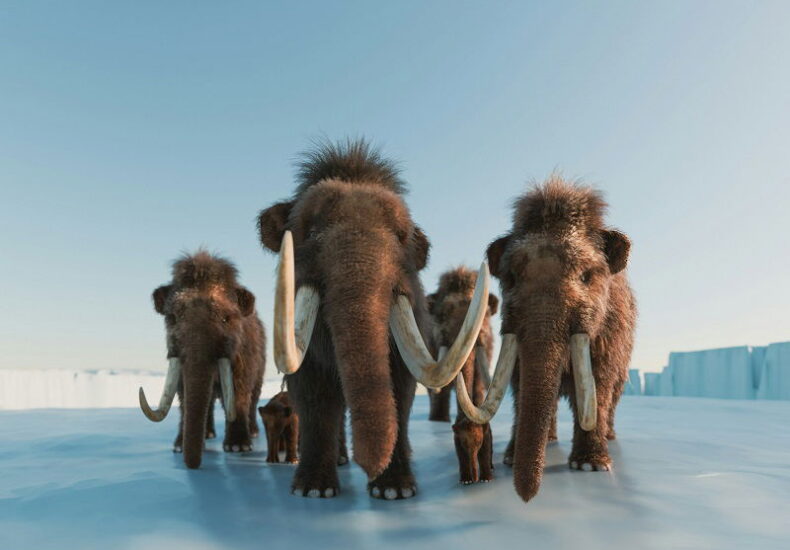
The researchers trace the human fingerprint on extinctions back 130,000 years, to when early humans began spreading across the globe. As people migrated into new regions, they hunted large mammals such as mammoths, mastodons, and giant ground sloths to extinction. Island ecosystems were hit especially hard, with species vanishing after humans arrived.
More recently, animals like the Tasmanian tiger and Steller’s sea cow joined the growing list of species lost forever.
When scientists compared these losses with the great extinction events of the past, they found some key differences. The asteroid impact that ended the age of dinosaurs wiped out a massive proportion of Earth’s species in an extremely short period of time. By contrast, today’s crisis is unfolding more gradually, but its reach is global and accelerating rapidly.
The closest ancient parallel may be the Eocene-Oligocene extinction event, which occurred around 34 million years ago. That episode, triggered by major global cooling and the formation of Antarctic ice sheets, caused widespread loss of mammal species across continents.
However, that event played out over millions of years, while human-driven extinction has occurred in a fraction of that time—roughly 100,000 years.
This key difference—speed and cause—is what alarms researchers most. The Eocene-Oligocene event was driven by natural climate change, but the current crisis is almost entirely the result of human activity: deforestation, pollution, overhunting, habitat destruction, and the rapid heating of the planet due to greenhouse gas emissions.
Dr. Hatfield emphasizes that while comparing ancient and modern losses is difficult—because of incomplete fossil records and unrecorded extinctions—the evidence still points to a world changing at breakneck speed.
“We may never know the full picture, but everything we do know tells us this is a human-driven transformation of life on Earth,” he says.
The message, he adds, is not one of despair but of responsibility. Although extinction rates are high, there is still time to act.
Reducing habitat loss, slowing climate change, and protecting biodiversity could prevent humanity from becoming the cause of the next great mass extinction—one that, unlike the asteroid that ended the dinosaurs, we have the power to stop.
https://knowridge.com/2025/10/the-sixth-extinction-how-humans-are-driving-species-to-the-edge-of-survival/
You may also like



更多推荐
You may be interested
 The New York Times
- Trump Administration, in Reversal, Tries to Continue Fight Against Law Firms 2026 年 3 月 3 日 Michael S. Schmidt, Jonah E. Bromwich and Devlin Barrett
- You Break It, You Own It? Not for Trump When It Comes to Iran 2026 年 3 月 3 日 Anton Troianovski
- Big Lenders’ Risky Loans Are Rattling Wall Street 2026 年 3 月 3 日 Rob Copeland and Maureen Farrell
- Trump’s Head-on-a-Pike Foreign Policy 2026 年 3 月 3 日 Ezra Klein and Jack McCordick
- As Trump Bashes Spain on Military Spending, German Chancellor Merz Piles On 2026 年 3 月 3 日 Jim Tankersley
- Labor Secretary’s Top Aides Forced Out 2026 年 3 月 3 日 Rebecca Davis O’Brien
- Apalachee High School Shooting: Colin Gray Found Guilty of Murder 2026 年 3 月 3 日 Rick Rojas and Johnny Kauffman
- Trump Immigration Sweeps Spawn Underground Safe Houses 2026 年 3 月 3 日 Miriam Jordan and Maddie McGarvey
- DHS Investigates Gregory Bovino’s Remarks About Prosecutor’s Jewish Faith 2026 年 3 月 3 日 Ernesto Londoño and Hamed Aleaziz
- Judge Vacates Punishments of Columbia Students Who Occupied a Building 2026 年 3 月 3 日 Sharon Otterman
Leave a Reply